
Senza categoria
Home » Il blog di mattoncini compatibili » Senza categoria » Autism and play: ideal activities and spaces with building bricks
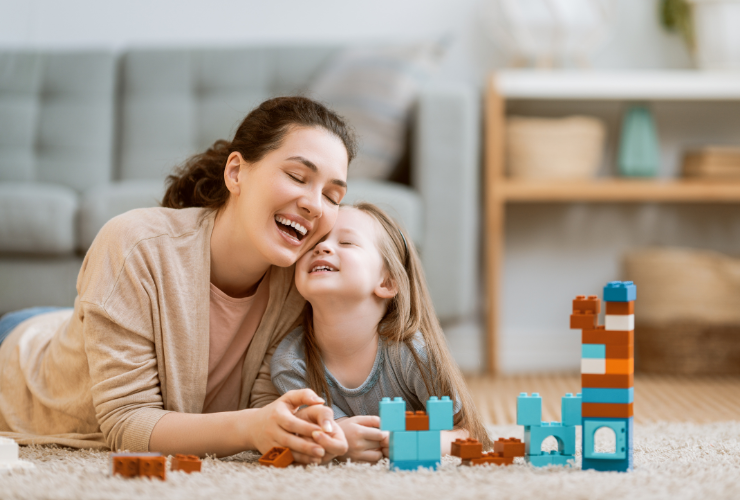
When it comes to autism and play, many parents and caregivers wonder what activities can truly help children with autism spectrum disorder improve attention, communication, and social skills. Among the most effective proposals, more and more studies and testimonials confirm the usefulness of building bricks, which transform from a simple pastime into an educational and therapeutic tool.
But it’s not just about play: the effectiveness of these activities also heavily depends on how the space is organized, who participates, and what strategies are adopted.
Children with autism and play as a tool
Play is one of the first forms of learning for every child. However, children with Autism Spectrum Disorder (ASD) often struggle to participate in group activities, take turns, or handle social situations that come naturally to others. This can lead them to isolate themselves or develop repetitive behaviors that further distance them from their peers.
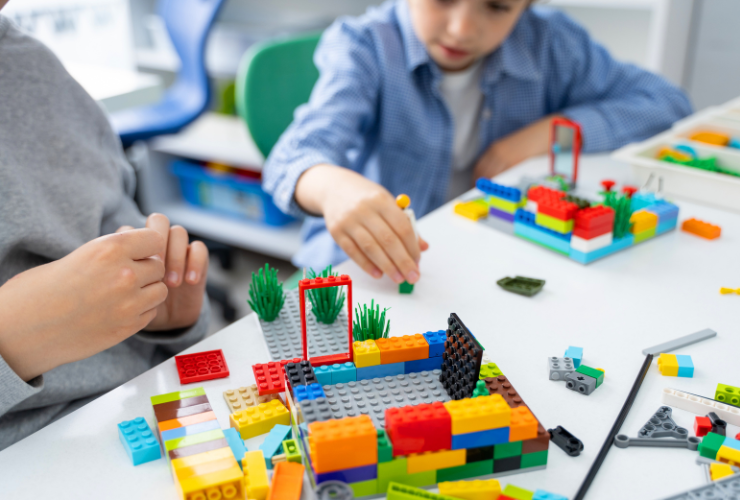
Using building bricks in a guided context, such as a Building Club, creates an environment where children can:
-
Focus on a meaningful activity,
-
Learn to work as a team,
-
Practice communication and social skills,
-
Better manage attention and emotions.
The importance of an organized and safe space
For the experience of autism and play to be truly effective, it’s not enough to have simple building bricks: it’s essential to create a tailored environment designed to welcome and support children with autism in their play and learning activities.
Here are some useful guidelines for setting up an ideal space:
A stimulating but not chaotic space
The room should be visually tidy, with materials well-organized and easily accessible. Too many colors or disorganized materials can cause overstimulation and make concentration difficult. It’s advisable to use neutral colors for the walls and choose themed shelves where sets are visible but not cluttered.
Well-defined zones
It’s useful to create two separate areas:
-
One dedicated to guided building, where children follow instructions and collaborate;
-
One for free building, which encourages creativity and personal expression.
In both areas, materials should be within reach, organized so that children can easily access them without creating mess or hazards.
The time-out chair
An often underestimated but important element in autism and play activities is the presence of a safe space within the activity area. This space, which can be a soft chair, a cozy rug, or a small secluded spot, serves as a true “emotional refuge” for the child.
Children with autism may experience moments of overexcitement, anxiety, or discomfort during group activities, even when they are guided and structured. Having a place to slow down, calm down, and regain emotional balance is crucial to ensure that the autism and play experience remains positive and is not perceived as a source of stress or frustration.
This safe corner allows the child to self-regulate, to take a break when needed, without feeling excluded or judged. At the same time, it allows caregivers and other children to continue the activity without interruptions, respecting everyone’s pace and needs.
It’s important to introduce this space to the child from the beginning, explaining that they can use it freely whenever they feel the need to “take a break” for a few minutes. This reinforces the perception that the environment is welcoming and respectful of their rhythms, key elements for the success of any autism and play activity.
Managing the group: small, homogeneous, and welcoming
Another fundamental aspect for the success of autism and play activities is managing the participants. Groups should never be too large or composed of children with too diverse needs, as each child must feel welcomed, respected, and free to express themselves without pressure or unnecessary comparisons.
When possible, it’s useful to involve peers without disorders, but only if they are adequately prepared to act as role models or tutors. These children can become a valuable resource in the autism and play journey, helping their peers observe positive behaviors and contributing to creating a climate of collaboration and mutual respect.
Autism and play: effective activities to encourage participation
Activities should be structured but flexible, to adapt to each child’s needs. Here are some suggestions:
1. Autism and guided building play
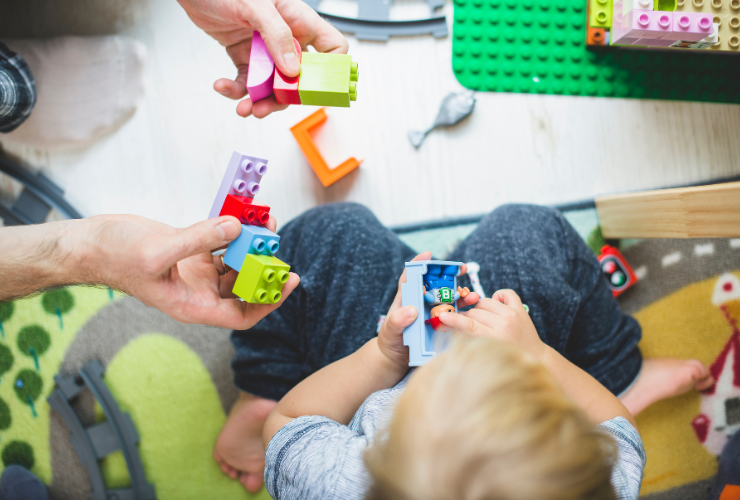
Start with a simple set or one that’s already partially built, which the child completes by following instructions. This helps them develop:
-
Ability to follow a sequence of actions,
-
Concentration and patience,
-
Satisfaction from achieving the result.
2. Collaborative building
The group works together to build a common project. Each child has a specific role:
-
Someone finds the pieces,
-
Someone reads the instructions,
-
Someone assembles the components.
This exercise stimulates collaboration, taking turns, and social communication.
3. Free building (freestyle)
Children can freely express their creativity, building whatever they want. Even in this phase, the role of the adult is important to:
-
Encourage sharing of ideas,
-
Support spontaneous collaboration,
-
Manage any moments of frustration or conflict.
The importance of parental involvement
Play activities don’t end when the child leaves the room. Family involvement is crucial to consolidate the skills acquired. Parents can:
-
Recreate similar activities at home,
-
Encourage moments of shared play,
-
Promote participation in small groups of friends or family.
Even at home, the child can continue to work on attention, collaboration, and communication, reinforcing what was learned during guided activities.
Autism and play experience as a bridge to the world
When we talk about autism and play, we’re not just talking about fun. We’re talking about a real opportunity to build relationships, learn to collaborate, manage emotions, and feel part of a group.
Building bricks, when used in an organized environment with targeted activities, can become an extraordinary tool to help children with autism express themselves, socialize, and grow.
No complicated or expensive tools are needed. Just a thoughtfully designed space, a welcoming group of peers, and the guidance of adults who believe in the potential of every child.
Because, in the end, each added brick is not just part of a construction, but a step towards a life richer in relationships and possibilities.