Stories & Fun Facts
Home » Il blog di mattoncini compatibili » Senza categoria » The History of LEGO®: How One Brick at a Time Conquered the World
The history of LEGO began in 1932 in Billund, a small town in Denmark, when Ole Kirk Christiansen, a local carpenter, founded a small craft business. Initially, he produced furniture and household items, but over time he started making wooden toys, driven by the economic crisis and the need to reinvent himself.
The name “LEGO” came two years later, born from a mix of the Danish words “leg godt,” meaning “play well.”
And from there, we can say the game truly began.
From Wood to Plastic: Mission (Almost) Impossible
After World War II, the toy industry began exploring new materials.
In 1947, LEGO was one of the first companies in Denmark to invest in an injection molding machine, thus starting to produce plastic toys (quite unusual for the time). It was a revolutionary step!
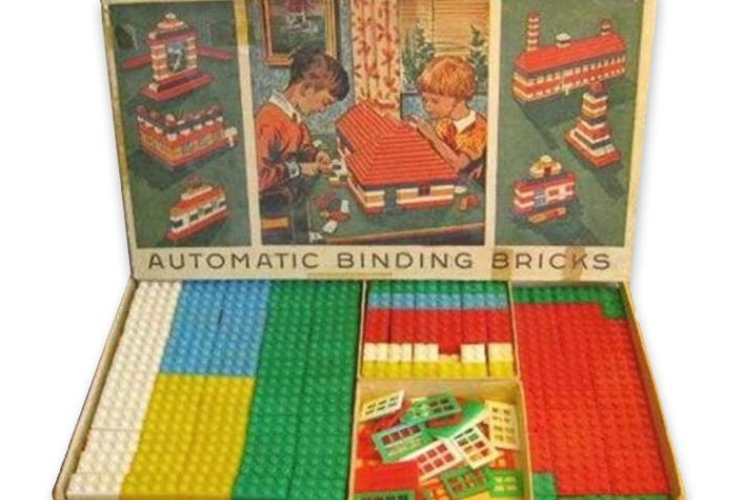
In 1949, the first plastic bricks were born: they were called “Automatic Binding Bricks”, the precursors to modern LEGO bricks. The concept was simple but brilliant: stackable bricks with an interlocking system that allowed for stability and endless building possibilities.
In 1958 came the breakthrough: Godtfred Kirk Christiansen, Ole’s son, patented the internal tube system that drastically improved the grip between bricks.
That patent is still the basis for the compatibility of LEGO bricks and compatible bricks using the same system today.
One Brick to Rule Them All
In the 1960s, the bricks began to speak all the languages of the world. No words were needed to play with them: just hands, imagination, and a floor to scatter them on (and a pair of slippers to avoid stepping on them barefoot!).
The genius of LEGO was all there: every piece is compatible with the others, regardless of color, theme, or year of production. A modular system so perfect it became a universal language.
When the LEGO patent expired, other companies said: “We want to play too.”
This is how compatible bricks were born, using the same interlocking system and perfectly matching with LEGO bricks.
Same dreams, same castles, same giant robots. Just more variety and often at a more affordable price.
The History of LEGO: Brilliant Inventions and Unwavering Passion
The history of LEGO is not just the chronicle of a business success, but a journey into imagination, the evolution of materials, and the human ability to build worlds with one’s own hands.
From wood to plastic, from Denmark to the entire world, these little bricks have transformed tables, carpets, and parquet floors into imaginary worlds.
And even today, the adventure continues: all it takes is an idea, a click, and lots of imagination!
Fun Facts About the History of Lego: Did You Know That…?
-
Every LEGO brick produced from 1958 to today is compatible with current ones.
-
The name LEGO was chosen before the invention of plastic bricks.
-
The company stopped producing wooden toys only in 1960, after a fire destroyed much of the factory.
- In the 1960s, LEGO became financially independent, entrusting capital management to the Kirkbi company, informally known as “the Lego bank.”